All-on-4 vs Traditional Implants: Which Architecture Is Right?
Both All-on-4 and traditional (multi-implant) approaches replace a full arch of teeth, but they use different engineering. All-on-4 anchors a full fixed bridge on four strategically angled implants; traditional full-arch work uses six or more straight implants. The right choice depends on your bone, your timeline, and your budget. Around Frisco, TX, most enquiries come in about on dental implants, so the order below follows the questions we get asked most.
| All-on-4 | Traditional Full-Arch Implants | |
|---|---|---|
| Implant count | 4 per arch (posterior implants angled) | 6–8+ straight implants per arch |
| Surgery | Usually one procedure | Often staged over months |
| Teeth in a day | Common — temporary fixed teeth same day | May wait 3–6 months for finals |
| Bone grafting | Often avoidable (graftless design) | Frequently required if bone is thin |
| Average cost (FL) | ~15,000–18,000 per arch; full case 22,889–31,258 | Higher — more implants, more surgery time |
| Recovery | Softer-food diet ~4 weeks | Longer staged healing between phases |
| Best for | Full-arch replacement, moderate bone loss, faster timeline | Patients with good bone wanting maximum implant count |
How the Architectures Differ Clinically
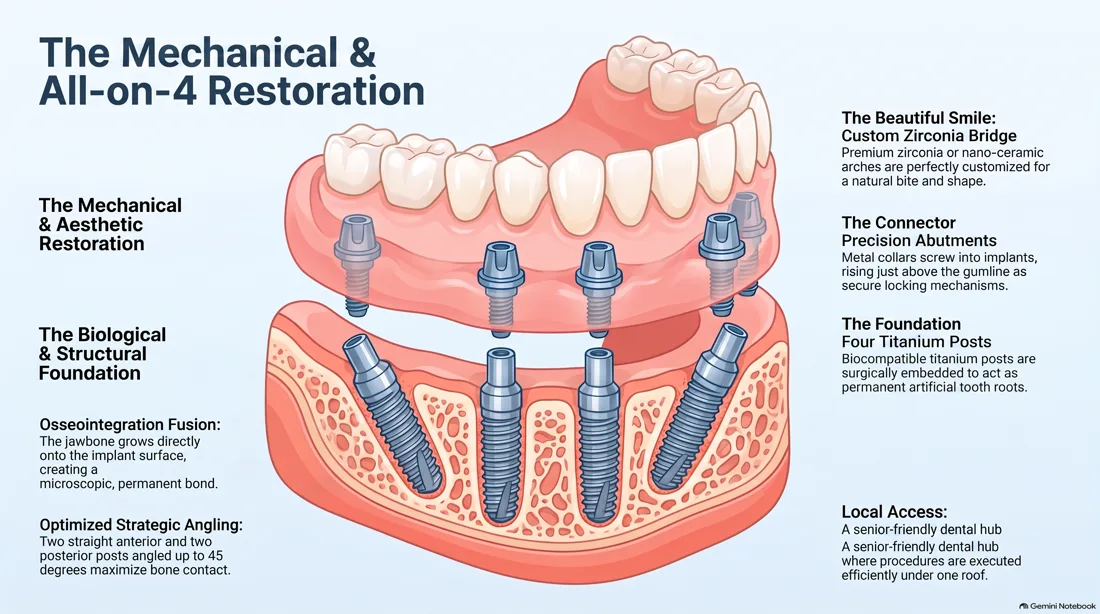
The key mechanical difference is angulation. All-on-4 tilts the two posterior implants to anchor in denser bone while staying clear of critical structures — which is what makes the graftless approach possible for many patients. Traditional straight implants demand adequate bone volume at every site, which is why grafting is common and treatment gets staged.
More implants is not automatically better. For a full-arch restoration, four well-placed angled implants distribute load comparably to six or eight straight ones — and the shorter, simpler All-on-4 protocol means fewer surgical visits and an earlier return to normal life.
Which One Should Frisco Patients Choose?
If you have moderate bone loss and want the fastest path to a fixed smile, All-on-4 is usually the recommended starting point — and the TX cost averages make it the more predictable budget too. Traditional implants can make sense when bone volume is excellent and the plan is a very high implant count for maximum long-term redundancy. A 3D CBCT scan at your consultation settles the question in minutes — get two opinions before committing.
More Comparisons
Not sure which comparison you need? Browse all comparisons.
Continue Your Research
Learn more before you decide — explore the guides, tools, and answers below.